Saturday, June 28, 2014


Education of parents to supply the security and love that children need more than anything is going to be my goal in life. People that create or adopt a child need to be more aware that their lives are to now be prioritized to guide this child. Then in the early years they and we can focus on empathy and doing the right thing instead of selfishness. We will be creating a strong happy child who will learn all those important subjects in school more readily, not having to be distracted by the stressors of neglect, emotional or physical abuse, even in the smallest doses.

I spent the entire day reading quotes. I had a hard time picking just one that reflects my feelings but I did at least narrow it down to three! Obviously, the African proverb is one I feel connected to--it is my blog name and will be the name of my venture some day. Every person that comes in contact with a child has the ability to have a positive effect, even if it is just a genuine smile given and returned.

Thursday, June 12, 2014

"The world needs garbage men, too" This is what I told my son when he didn't want to go to school. He took it as nasty critical sarcasm,  but I meant that I would love him no matter what he did. If school made him so unhappy, maybe he should not go.  Not everyone can be rocket scientists, or wants to be. I wanted him to be happy.  Why did he hate school so much? He did well in all his subjects. Maybe he found it difficult and he was tired of the struggle. Maybe he was bored because it was too easy.  Should he have been assessed? What kind of message would that have sent him?

My friend Jaclyn has been assessed over and over to judge her abilities, her growth, and her difficulties. At the age of 20, she knows she is not like most people, and sometimes refuses to try something because she believes what assessment tests tell her she can and can't do. But because of her strong family and friend support, she will eventually try and succeed at some tasks, proving the assessments wrong. Yet without these assessments, she may have struggled and failed in mainstream schooling. Instead she received high quality services that helped her in the areas she needed help most.

What is the ultimate goal of assessments? How accurate or misleading can they be? A child who is self-conscious will score differently than a self-assured child, and evaluations might be different done by different people. There is no way to test concretely, but that doesn't render assessments useless. They can be a valuable guide try to figure out what can't be explained by the children themselves, as well as a ruler to measure improvements.

Assessment of children's abilities, disabilities, strengths and weaknesses must be done carefully. Early childhood is such a vulnerable time for building self-esteem, and the way children receive and process comments made and events that take place in their various systems is very individualistic.
Concerns voiced to parents, tests given and assessment meetings that take place send a message to a child that they have something wrong with them.  They could either try to prove it wrong or succumb to the idea that they can do less because they are not as good as anyone else.

Ability assessments are necessary to determine what help, if any, is needed for a person to feel happy and comfortable in their world.  Life is granted to us by God, not to have riches or be powerful,  but to love and be loved. Part of this is pride in oneself; if you can provide for yourself and not be dependent on others except for companionship, you will be happy and comfortable.

In Mpumalanga, an area in South Africa, children are only assessed if they have completed a grade twice, or are repeatedly in trouble with the  law. Even in these instances, no help is offered until the child reaches 13 years old. (http://www.mpumalanga.gov.za/education/default.asp?nav=specialeducation They are then taught a trade such as building, hairdressing, office work, agriculture, or domestic service.
This is a benefit of living in a developed area. In the instance of a remote zone with the address of area "B", my Peace Corps acquaintance tells me of the experience within her village and host family. Children are only assessed at the end of each year by an exam which will let them progress to the next grade or be held back. They can repeat grades an indefinite number of times, until they eventually pass or just quit school. There is no known ADD/ADHD, autism, or evaluated learning disabilities.

Sunday, June 1, 2014

New Jersey Baby Dies in Recalled Nap Nanny Chair

Sunday, Jun 1, 2014  |  Updated 2:27 PM EDT
View Comments (
23
)
|
Email
|
Print

NJ Baby Latest to Die in Recalled Chair
AP
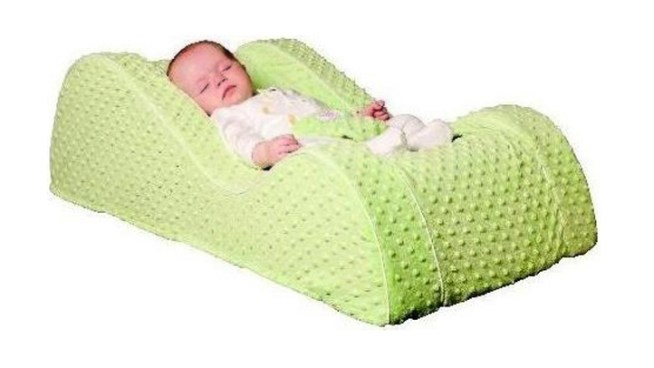
This undated image provided by the Consumer Products Safety Commission (CPSC) shows a Nap Nanny baby recliner. month-old baby girl in New Jersey is the latest child to die in the recalled infant recliner known as the Nap Nanny. 
The Consumer Product Safety Commission said the Hopatcong baby was secured into the chair by a belt but was found hanging over its side, trapped between the chair and a crib bumper.
The agency is warning parents, again, not to use the chairs. Several children have died in them, the CPSC says.
The Nap Nanny was designed to mimic the curves of a baby car seat, elevating an infant slightly to help reduce reflux, gas, stuffiness or other problems.
The commission says the chairs are not being sold in stores any longer but are still a popular product at yard sales, online auctions or as hand-me-down gifts.
"The products are hazardous and it is illegal to sell or resell them," CPSC says.
The agency did not say when the New Jersey girl died.

Saturday, May 31, 2014

How Stress Can Effect Children's Development

     Looking over the list, I feel blessed that I was struggling to make some kind of connection. I have never experienced any of these stressors,  and had a difficult time thinking of anyone I knew that had. There was a family that lived across the street from us as my kids were growing up that lived in a world of chaos, which occasionally resulted in violence. My kids played with their kids because of their similar ages and close proximity. As time went by, they all drifted apart and  we moved out of state, but through Facebook I do have some information on where their lives took them.
     This family had five children within a 7 year span, all "accidents" by the mother's account. The mom and dad were always yelling at each other, slamming doors, and pulling away in their cars in haste. Mom did not work outside the home, Dad jumped from job to job, and relied quite a bit on financial help from his parents. Mom liked her beer and a clean home, to the point of neglecting her children, or yelling at them for making a mess. Meals were never prepared formally; the kids ate cereal, junk food or ate at my house. The parents never made it to any school events, claiming the kids didn't bring home notices. Any after school activities or sports events the children were involved in would require them to ask for rides all the time because no one would remember to pick them up. Before they were old enough to take care of themselves, they were always dirty, with crusted noses and matted hair.
     When the kids were young (my son was 7, daughter 4, their two were 6 and 4,  the youngest ones not born yet) , they were all pretty nice but had severe eczema and asthma. They would constantly scratch, sometimes to bleeding, and cry. I always felt these conditions were exacerbated by stress, because they worsened when Dad disappeared for days at a time, or lost yet another job and the fighting at home increased. As the years went on, they became rude and demanding, as well as disrespectful.  My oldest daughter recently recalled a time she got in trouble with me because she took on some of these characteristics when she returned home after a full day at their house. The youngest child, who started playing with my daughter when they were toddlers, was the worst of all. She ran around bouncing off the walls and being very aggressive to my daughter. My daughter, also naturally aggressive, fought back, which initially caused a lot of tension in my house when they were together. I started only letting them play at my home and tried to monitor the behavior. The girl learned what was acceptable behavior when she was with us, but reverted right back to disrespectful and violent when home with her siblings. They were always punching, kicking and scratching each other.
     Every one of those five children struggled in school.  Only two of the five have graduated and gone on to college, both of them due to their sports abilities. Two others' psychosocial development was marked by drug and alcohol use, piercings, shoplifting, truancy from school, and obesity. The last girl is graduating high school this year, but I have not heard any news about college.In my opinion, the stressors they all experienced were not compensated for; they all received what was happening in different ways and reacted
individually.
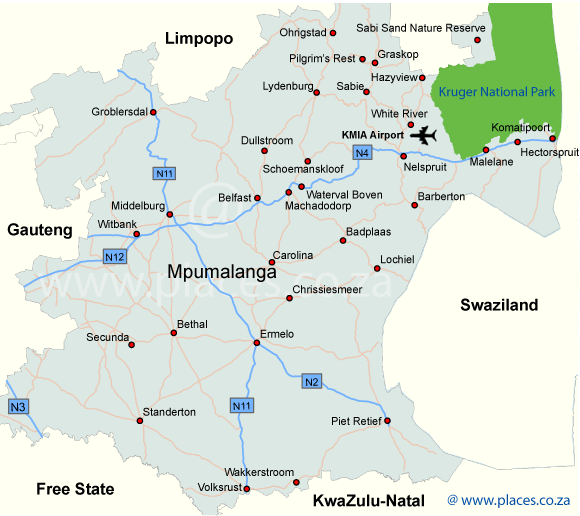
Mpumalanga is just above Swaziland, below Kruger National Park

   The issue of disease in South Africa interested me because of my personal connection to a member of the Peace Corps who is working for the prevention of HIV/AIDS through education and action. She has been telling me what life is like for children in Mpumalanga, a region that has the second highest rate of the disease in South Africa. Many children are orphaned, and cared for by grandparents or other family members.
An extensive study on the effects of education and possible solutions in this particular area of South Africa was done in 2007 by Sonto Tryphina Dlamini. The following table lists common situations and their effects which are obvious detriments to children's normal development. The study I read also included complications of educators themselves missing work due to illness, causing classrooms to be as full as 50 to 100 children (DLAMINI, 2007), thereby making an real education of these children close to impossible.

Table 2.4: HIV/AIDS: Consequences for education (Boler & Carroll, 2003:5)
CONSEQUENCES FOR EDUCATION ORPHANS AND VULNERABLE
CHILDREN: ISSUES
Poverty
• Drop out of education due to unaffordable school fees;
• Stigmatised because of inadequate uniform and learning materials; and
• Low attention span due to hunger.
Stigma
• Social exclusion: marginalisation of children affected by HIV/AIDS;
• Negative learning environment;
• Barriers to participation.
Trauma
• Special educational needs; and
• Difficulty to concentrate and learn
• Low motivation for learning due to depression and anxiety
Bereavement
• Silence surrounding death in many countries may lead to emotional
problems, which in turn are likely to impact on learning.
Lack of family support
• Low educational expectations of orphans;
• Lower prioritisation of orphans’education over other children within the household
• Lack of homework support or household encouragement of education.
 Working children
• Tiredness during classes;
• Erratic school attendance; and
• Lower learning achievement.
 Adult roles
• Increased responsibilities at home reduce the amount of time available for education;
• Education becomes less relevant; and
• Problems with respect and discipline in the classroom as young people become adults prematurely
 and consequently, expect to be treated as such.

The work of the Peace Corps is to reduce HIV infection, stigma and discrimination, and gender-based violence.  They address prevention and care, especially that of women, orphans, and vulnerable children.

References:

Dlamini, Sonto Triphina. Study on the Impact of HIV/AIDS  on the Didatic Situation at Schools in Mpumalanga,  Retreived from:http://libserv5.tut.ac.za:7780/pls/eres/wpg_docload.download_file?p_filename=F1982178366/DlaminiST.pdf

BOLER, T. & CARROLL, K. 2003. HIV AIDS & education: Addressing the educational needs of orphans and vulnerable children. London: Action Aid International and Save the children Fund. 


Saturday, May 17, 2014

Baby sound asleep in crib -           

SIDS is so horribly mysterious to date that it enters my mind every day at work. I care for 8 infants at a facility run by a government agency.  They have many rules in place to reduce the risk of SIDS.  We are sent to recurrent training, monitored on camera, observed by trainers, and occasionally scolded for bringing in an item to benefit the babies  that was not pre-approved.  I find myself annoyed at some practices; the babies don't sleep well without blankets, the lights are always on, and they have to be put in the crib if they fall asleep while playing on the floor (which of course wakes them when they are moved). Our boppies and  receiving blankets were confiscated, and we are not allowed to have a cloth barrier between babies faces and the carpet (unsanitary!) Where do you draw the line between risks and infants need for rest?

Well, the findings from researching SIDS statistics had me convinced that all these precautions are valid. New Zealand had highest rates as of SIDS since the 1950's. (Franklin)  An amazing theory by Barry Richardson, an expert in materials degradation from Britain,  makes so much sense, and there have been some early research and statistics to validate his claims. This research was conducted by Dr. T. James Sprott from New Zealand, a forensic scientist and chemist. This is the basic idea:

Common household fungus, S. Brevicaulis, is harmless by itself but when it feeds on certain chemicals used as flame retardants the byproducts produced are dangerous nerve gasses. They don't make the baby ill, they shut down the nervous system, stopping the heart function and breathing.(Quinn, 2002). Babies who are put "back to sleep" and with little bedding have better ventilation, so the campaign for having babies sleep on their backs was successful in saving lives.  There was a great deal of justification on the following websites by comparing statistics of countries that did not have chemicals in their mattresses, or had wrapped them to prevent vapors from escaping. I was very excited about all this news and ready to approach my annoying regulations at work with a better attitude. I also wondered why this wasn't big news, and I had never heard of it considering the attention SIDS prevention gets at the Marine Corp Child Development Center.

Unfortunately, an editor's note at the bottom of one website(Quinn, 2002) directed me to a further study stating that research into this theory has declared it unfounded.(Sids-network.org) So the mystery remains, and the fear is ever-present.

http://www.johnleemd.com/store/art_sids.html

http://www.midwiferytoday.com/articles/bedding.asp

http://sids-network.org/images/limer1.pdf

Saturday, May 10, 2014


    "No one looks panicky so I guess I'm not dying. . .but how can I survive this?"  were my exact thoughts when I was at the end of my advanced labor. I had been in labor for 19 hours with my first child and was about to give birth, starting to feel the urgency to push and I was very scared. I was also exhausted and irritable, snapping at my husband who was trying everything to be of some kind of help. I had come to the hospital after feeling the first contraction broke my water, and had been lying half on my back, half on my side, with a fetal monitor wire run up inside me attached to my son's scalp, IV's, other monitors strapped across my belly (which I had been scolded for knocking it out of place while trying to adjust my miserable self) and wanted it all to be over. The romantic moment I had envisioned during my pregnancy was totally gone; I would not look dreamily into my husband's eyes while holding our beautiful son on my chest--I just wanted to go in a corner somewhere and be left alone to sleep.
     How do women I read about during this assignment go it alone? I was proud of myself for having no pain medication, but my son's birth had no complications, and I had a huge support system of family, friends, and doctors. In underdeveloped countries, many women (or young girls) give birth alone, or with just a midwife and no medical support. But throughout history, we have populated this planet since cavemen times, and many manage to survive. I feel the amount of emotion experienced by the mother during pregnancy and childbirth has an effect on her interaction with her children, which of course effects their development.
     In Turkey, as current as 2004, they had experienced a very high infant mortality rate. They were shifting from mid-wife births to hospital/doctor assisted births. The number of anesthesiologists who were familiar with epidural procedures was very low, resulting in general anesthesia C-sections at a rate of about 90% (Schalken 2004).
     Besides the risk of general anesthesia on the baby, I  would expect that early bonding could not occur as well as if Mom was awake. But the fear of pain had women choosing this option. I certainly could not be judgmental, remembering my own thoughts.
     Thankfully, a U.S. nonprofit organization called Kybele is assisting doctors with learning this procedure. A new textbook instructing on epidural analgesic procedures, the only one of its kind in Turkey, has been published and goals have been set to reduce general anesthesia C-sections to 30%.

Reference:
www.parents.com/pregnancy/giving-birth/vaginal/birth-customs-around-the-world/?page=6